How to tell if your roof took hail damage when it looks fine from the ground
Most hail-damaged roofs in Oklahoma City look completely normal from the street. That is exactly the problem.
September 7, 2026 · 4 min read
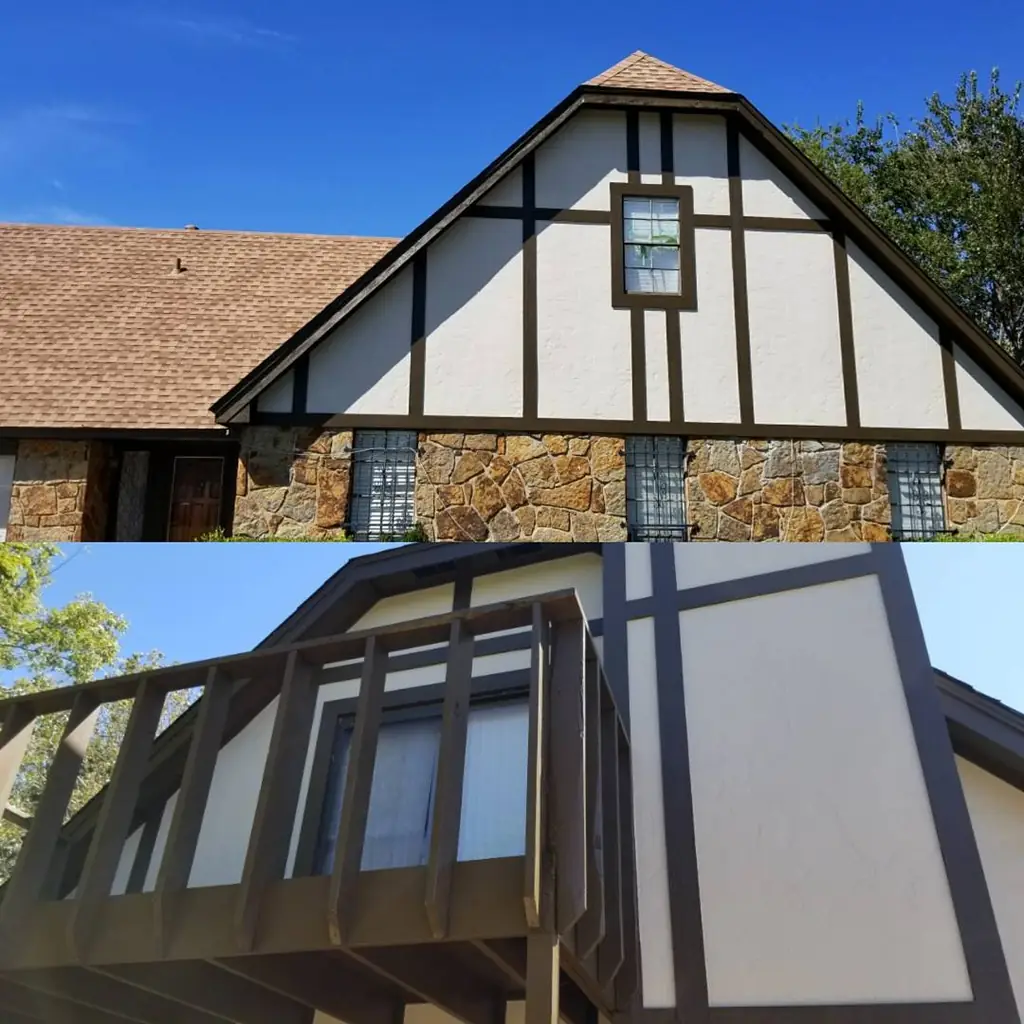
The single most expensive assumption an Oklahoma City homeowner makes about their roof is that hail damage would be obvious. It almost never is. A storm rolls through, you walk out the next morning, the roof looks exactly the way it looked the day before, and you get on with your life. Three or four years later the roof starts leaking and the storm that actually killed it is long past any claim deadline.
That gap between when the damage happens and when it shows up is worth understanding, because it is the whole reason roofers keep telling you to get an inspection after a storm you thought was nothing.
What hail actually does to a shingle
An asphalt shingle is a fiberglass mat, saturated in asphalt, with a layer of ceramic granules pressed into the surface. The granules are not decoration. They are the shingle's sunscreen, and they are the only thing standing between the asphalt and Oklahoma's ultraviolet load.
When a hailstone hits, it usually does not punch a hole. What it does is bruise. The impact fractures the mat underneath and knocks a patch of granules loose around the strike point. Run your hand over a fresh hail hit and it feels soft, a bit like a bruise on fruit, because the structure under the surface has broken even though the surface has not opened up.
From that moment the shingle is on a clock. Exposed asphalt oxidizes, gets brittle, and the crack in the mat keeps working outward from the bruise every time the roof heats and cools. A summer in Oklahoma will move a roof surface through an enormous temperature swing between afternoon and pre-dawn, and every one of those cycles opens the fracture a little further.
Wind damage looks like nothing at all
Wind is even sneakier. Shingles are held down partly by nails and partly by a strip of adhesive that bonds each course to the one below it once the sun warms it. Strong wind lifts the tab and breaks that seal. Then the wind drops, the shingle lies back down, and it looks completely untouched.
It is not. It is now a loose flap held on by nails alone, and the next storm is the one that takes it off, along with whatever water gets underneath in the meantime. You cannot see a broken seal strip from the ground and you often cannot see it from a ladder either. You find it by lifting tabs.
What you can check safely from the ground
Please do not climb up there. A wet or hail-scattered roof is genuinely dangerous and the things worth looking at are mostly not visible from a ladder anyway. But there are real signals you can check with both feet on the grass.
- Look in the gutters and at the bottom of the downspouts for granules. A handful of grit that looks like coarse black sand means the roof surface is shedding.
- Check the soft metals. Gutters, downspouts, vent caps, flashing and any metal chimney cap dent before shingles do. Dimples in those are the clearest sign that hail of a damaging size actually reached your address.
- Look at anything else on the property that takes weather. Air conditioner fins, mailbox, garage door panels, patio furniture, the top of a grill. If those are dimpled, the roof took the same hits.
- Walk the perimeter for shingle pieces or whole tabs on the ground and in the flower beds.
- Look up at the ridge line from a distance. A ridge cap that has lifted or gone wavy is visible from the yard.
None of that confirms damage on its own and none of it rules damage out. It tells you whether it is worth having somebody get up there.
Why the timing matters more than the damage
Homeowner policies cover sudden storm damage and specifically exclude wear, age and deferred maintenance. That single distinction is where nearly every disputed roof claim in this state lives.
A roof inspected shortly after a storm, with the hits chalked and photographed and the soft metals documented, is a straightforward claim about a specific weather event. The same roof inspected four years later, with the bruises now cracked open and the granules long gone, looks like an old worn roof to the person assessing it. The damage is identical. The evidence is not.
This is not a reason to file a claim on every storm. It is a reason to know what you have while you still have the option.
What an inspection should actually involve
A real hail inspection is not a walk around the yard and a verbal opinion. Somebody gets on the roof, marks out a test square on each slope so the damage can be counted per unit area rather than guessed at, photographs the strikes with something in frame for scale, and checks the soft metals and the penetrations. You should come away with pictures, not just a number.
At Boulevard Roofing Co the inspection and the estimate are both free, and so is the consultation if it turns into an insurance claim. We are an insurance claims specialist, so if there is a claim to make we document it properly and meet the adjuster on the roof rather than leaving you to interpret the report afterwards. If there is no real damage we will tell you that too, which is a much shorter conversation and costs you nothing either way.
Call 405-850-8036 and we will come and look. Serving Oklahoma City and the surrounding areas.
Boulevard Roofing Co, 405-850-8036
Call 405-850-8036More articles
What your Oklahoma homeowner's policy actually covers on a roof
The deductible you remember is often not the one that applies to a roof claim. Here is what to look for before you file.
The five places an Oklahoma roof leaks first
Water almost never comes through the field of a roof. It comes through the details, and there are five of them worth knowing.