The five places an Oklahoma roof leaks first
Water almost never comes through the field of a roof. It comes through the details, and there are five of them worth knowing.
September 7, 2026 · 4 min read
When a ceiling stain appears, most people picture a hole in the middle of the roof. That is almost never what happened. The broad field of shingles is the part of a roof that works, because it is nothing but overlapping layers shedding water downhill. Roofs leak where that simple system gets interrupted.
There are five interruptions that account for the large majority of the leaks we get called out to in Oklahoma City, and each one fails in its own recognizable way.
One: the pipe boot
Every plumbing vent that comes through your roof is sealed with a flashing that has a flexible collar hugging the pipe. On most houses that collar is rubber, and rubber is the shortest-lived thing on the entire roof. Ultraviolet exposure hardens it, then it splits, usually around the eight to twelve year mark.
Once it splits, water runs straight down the outside of the pipe, into the attic, and drops onto whatever is below. This is the single most common leak we find, and it is also the cheapest to fix if it is caught before the decking around it has rotted. A boot is a small part. A boot that has been leaking for two winters is a decking repair.
Two: step flashing at walls and chimneys
Where a roof slope runs into a vertical wall or a chimney, the joint is sealed with step flashing: individual L-shaped pieces of metal woven in with each course of shingles so that water is always directed out on top of the layer below.
It fails for three reasons, all of them human. Somebody reused the old flashing on a re-roof instead of replacing it. Somebody ran one continuous strip of metal up the wall instead of stepping it, which works for about a year. Or somebody found a leak and troweled roofing tar over the whole junction, which sheds water beautifully until the tar cracks, and then traps it.
If you see black tar smeared around a chimney, that is not a repair. That is somebody deferring the repair.
Three: valleys
A valley is where two roof planes meet and funnel their combined water down one line. It is the highest-volume, fastest-moving water anywhere on the roof, and it deserves metal underneath or a properly detailed membrane.
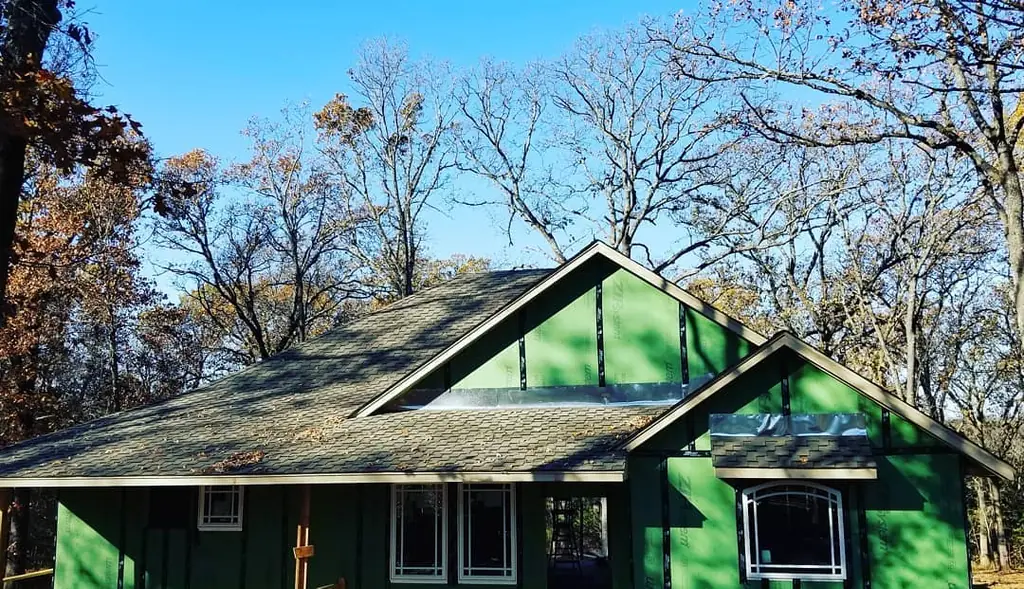
Valleys fail when there is nothing under the shingles but felt, when debris dams up and pushes water sideways underneath the courses, or when the cut was made wrong so the water crosses a seam. On houses with a lot of gables and dormers, which describes a great many of the more interesting homes around Oklahoma City, there are more valleys and therefore more of this risk.
Four: the ridge, and ventilation generally
The ridge is the peak, and on most modern roofs it is also a vent: a continuous slot cut along the top with a ridge vent covering it, letting hot attic air escape while soffit vents pull cool air in at the eaves.
When that system is right, the attic stays close to outside temperature and the roof lasts. When intake is blocked or the ridge vent is damaged, the attic superheats in an Oklahoma summer and cooks the shingles from underneath, ageing the roof from the inside while your air conditioning fights the ceiling. Storm-lifted ridge cap is also one of the few failures you can genuinely spot from your own yard.
Five: the gutters, which are not really a leak
Gutters do not leak into the house, but they cause a category of damage people blame on the roof. When a gutter overflows or holds standing water, that water sits against the fascia board it is screwed to. Fascia is usually painted pine, and it absorbs, swells and goes soft.
By the time you notice, the rafter tails behind the fascia are often wet too, and what would have been a gutter adjustment has become a trim and structural repair. Blocked gutters also back water up under the bottom course of shingles at the eave, which is the one place on the roof where water can genuinely get in from below.
Why the stain is never above the leak
One thing worth knowing before you call anybody. Water that gets through the roof does not fall straight down. It runs along the top of the decking, follows a rafter, crosses a ceiling joist and drops through the first drywall seam it finds. The stain on your ceiling can be a long way from the actual entry point, sometimes on the other side of the room.
That is why a real diagnosis starts above the stain and works uphill through every penetration and transition on that plane, and why sealant applied at the visible symptom moves a leak rather than stopping it.
Boulevard Roofing Co handles roof repair and skylight replacement across Oklahoma City and the surrounding areas, and the inspection is free. If the roof still has years left in it we would rather do the repair and keep the number small. Call 405-850-8036.
Boulevard Roofing Co, 405-850-8036
Call 405-850-8036More articles
How to tell if your roof took hail damage when it looks fine from the ground
Most hail-damaged roofs in Oklahoma City look completely normal from the street. That is exactly the problem.
What your Oklahoma homeowner's policy actually covers on a roof
The deductible you remember is often not the one that applies to a roof claim. Here is what to look for before you file.